No Woman Left Behind: Eye Care Foundation’s efforts on the ground
In 2023, UN Women released the No Woman Left Behind policy brief, calling attention to a critical yet often overlooked reality: vision impairment is both a cause and consequence of gender inequality¹ ². This policy brief was given highlight during 2030 INSIGHT Live Nepal 2025 in the IAPB Gender Equity Member Engagement Group breakout session. When women and girls cannot access the eye care they need, it affects every aspect of their lives — from education and employment to safety and autonomy.
The Eye Care Foundation (ECF) is working across Cambodia, Laos, Nepal, Tanzania, and Vietnam to turn this policy into action. Along with the Fred Hollows Foundation and other organizations, ECF is involved in a mapping exercise focusing on activities geared towards the promotion of eye care for women and girls. Here’s how efforts are unfolding on the ground.
Cambodia

In Cambodia, social norms often place caregiving above self-care, leaving women’s eye health neglected. To counter this, ECF is working closely with the Ministry of Women’s Affairs and the National Program for Eye Health to develop inclusive policies and communication materials that speak directly to women’s needs. Currently, the Policy to Promote Women and Girls to Access Eye Care Services is being developed with participants from National Program for Eye Health, Ministry of Health, Ministry of Education, Youth and Sports and the Ministry of Social Affairs, Veterans and Youth Rehabilitation as well as other NGOs working in (eye) health services.
Notably, a five-year partnership with VisionSpring aims to provide glasses to nearly 100,000 factory workers, the majority of whom are women, through the Clear Vision Workplace Program³. By combining policy-level engagement with targeted community programs, Cambodia is laying the groundwork for more equitable access.
Laos

While gender-specific data in Laos remains limited, internal monitoring indicates that more women than men are accessing services such as cataract surgeries⁴. ECF supports its partners in delivering primary eye care (PEC) workshops specifically for members of the Lao Women’s Union across project provinces, ensuring women and girls are directly reached through trusted community networks.
To further embed eye health into local governance, the Provincial Governor of one ECF-supported province appointed the Deputy Head of the Lao Women’s Union as a member of the provincial Eye Care Implementation Management Committee (IMC). This strategic inclusion strengthens advocacy and helps drive eye health priorities within women’s organizations. Eye health personnel are regularly invited to participate in Lao Women’s Union events including International Women’s Day and Lao National Women’s Establishment Day, offering screenings and educational sessions tailored to women’s needs. These efforts show how grassroots structures can serve as powerful platforms for expanding access and equity in eye care.
Nepal

In Nepal, women are more likely than men to experience vision problems, yet less likely to get the treatment they need 5 6. This gap is not just about healthcare access; it reflects deeper issues like gender roles, financial inequality, and limited decision-making power. In many rural areas, women are expected to stay home and care for the family, while men control the money and make most household decisions. As a result, women often do not prioritize or are not allowed to prioritize their own health.
To address these challenges, ECF supports training for Female Community Health Volunteers (FCHVs) who spread awareness about eye health in their villages. In places like Arjunchaupari, Kaligandaki, and Kalikot, ECF has helped train teachers and local women to recognize vision problems and connect people to care. ECF also supports female leaders in the eye care field, like Dr. Eli Pradhan, who is helping advocate for more opportunities for women ophthalmologists across Asia. These efforts are helping make eye care more inclusive — not just by treating women, but by empowering them to lead change in their communities.
Tanzania
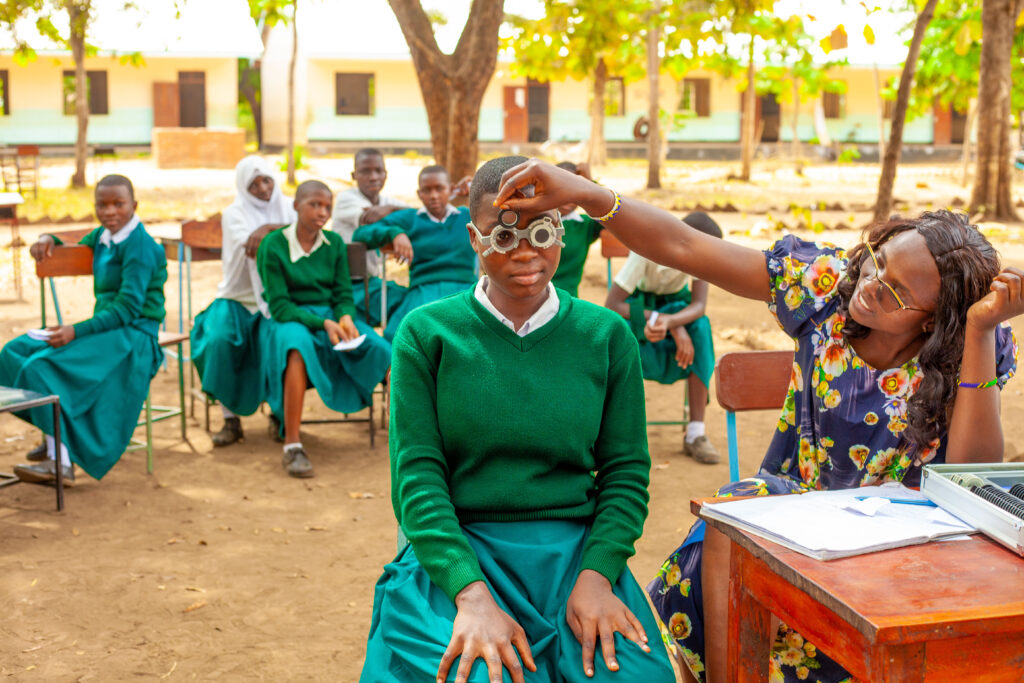
Despite a lack of specific programs targeting women in some regions, data from Morogoro from 2024 shows higher screening rates among women and girls.⁷ However, challenges remain in leadership positions where women are underrepresented.⁸
ECF invests in the training and education of female eye care professionals, such as optometrist Ms. Pilly Azizi. We also support leaders like Regional Eye Care Coordinator Dr. Wahida Mtiro, who is responsible for coordinating and overseeing eye care services in the Morogoro region. Her goal is to raise awareness of eye health and ensure that people receive timely and comprehensive eye care. At the community level, mothers are recognized as key health influencers, influencing the care-seeking behavior of entire families.
Vietnam
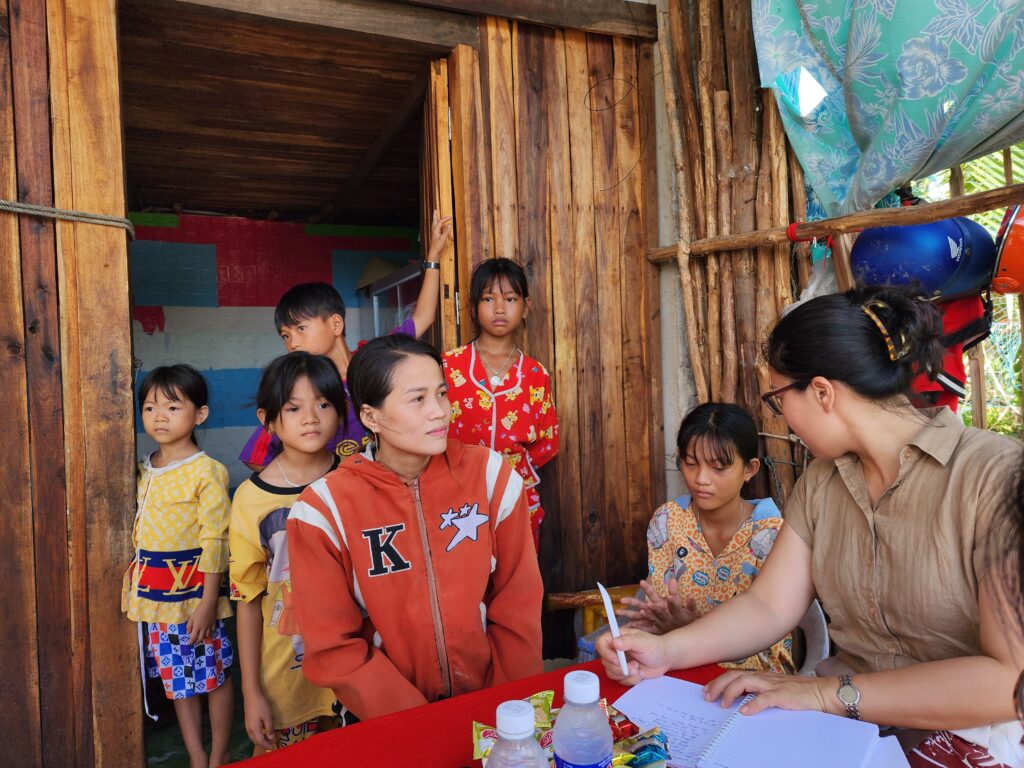
In Vietnam, women are nearly twice as likely to experience visual impairment as men, due to factors such as longer life expectancy, greater exposure to risks, and social inequalities that limit their access to eye care.[9] Women typically serve as primary caregivers at home, while men are seen as the primary breadwinners, leading to a cultural focus on men’s health. Social stigma also discourages girls and women from wearing glasses, making it harder for them to get the care they need. While ECF’s projects do not focus exclusively on women, gender equality is a priority, with careful monitoring to ensure women and girls have equal access to services.
To address these challenges, ECF Vietnam, with support from USAID, conducted a study in 2022 to identify gender barriers to eye care. This study collected data on access for boys and girls and examined social and cultural factors that influence care.[10] The findings will help local governments develop better strategies to reach girls. Key organizations like the Department of Maternal and Child Health and the Vietnam Women’s Union also support women’s eye care and are working towards more inclusive services and better outcomes for women and children.
Vision Equality is Gender Equality
The No Woman Left Behind initiative is more than a policy framework—it’s a call to rethink how we deliver care. Across all countries, common themes emerge: the power of community-based services, the importance of inclusive policies, and the need to position women in leadership positions in healthcare.¹¹
Achieving gender equality in eye care isn’t just about treatment; it’s also about transforming systems. ECF’s work demonstrates that when we listen to women, educate them, support them, and design for them, we move closer to a world where no woman is left behind—in health, vision, or opportunity.
Footnotes:
- UN Women (2023). No Woman Left Behind: Closing the Gender Gap in Health and Social Protection.
- Courtright, P., & Lewallen, S. (2009). Gender and blindness. Ophthalmic Epidemiology.
- VisionSpring (2022). Clear Vision Workplace Program Snapshot: Cambodia.
- Eye Care Foundation (2023). Internal Monitoring Data – Laos.
- RAAB Survey Nepal (2022).
- Gurung, R., et al. (2020). Gender Disparity in Cataract Surgery Uptake. Community Eye Health Journal.
- Eye Care Foundation (2024). Internal Monitoring Data – Morogoro, Tanzania.
- IAPB (2021). Gender Equity in Eye Health: Evidence Gap Map.
- RAAB Survey Vietnam (2022).
- USAID (2023). Gender Barriers to Eye Care in Rural Vietnam.
- Perry, H., et al. (2014). Community Health Workers in Global Health. Human Resources for Health.


