Current situation in our project countries: progress under pressure from global developments
In recent weeks, we have seen how closely our work is connected to global developments. Across all our project countries Laos, Cambodja, Vietnam, Nepal en Tanzania, activities continue, but conditions vary and are increasingly affecting implementation.
The situation in Cambodia
In Cambodia, the situation remains stable, with successful school eye screenings, mobile eye clinics, and strong collaboration with local authorities. The focus is on further expanding and strengthening existing eye care programs. However, rising fuel prices and increasing costs are also impacting the implementation of our projects here.
The situation in Laos
In Laos, we see the direct impact of geopolitical tensions. Developments in the Middle East have led to fuel shortages and significant price increases. This makes transportation more expensive and complicates project implementation. At the same time, results remain strong, and work continues on structural improvements, such as including eye care in the national health insurance system.
The situation in Nepal
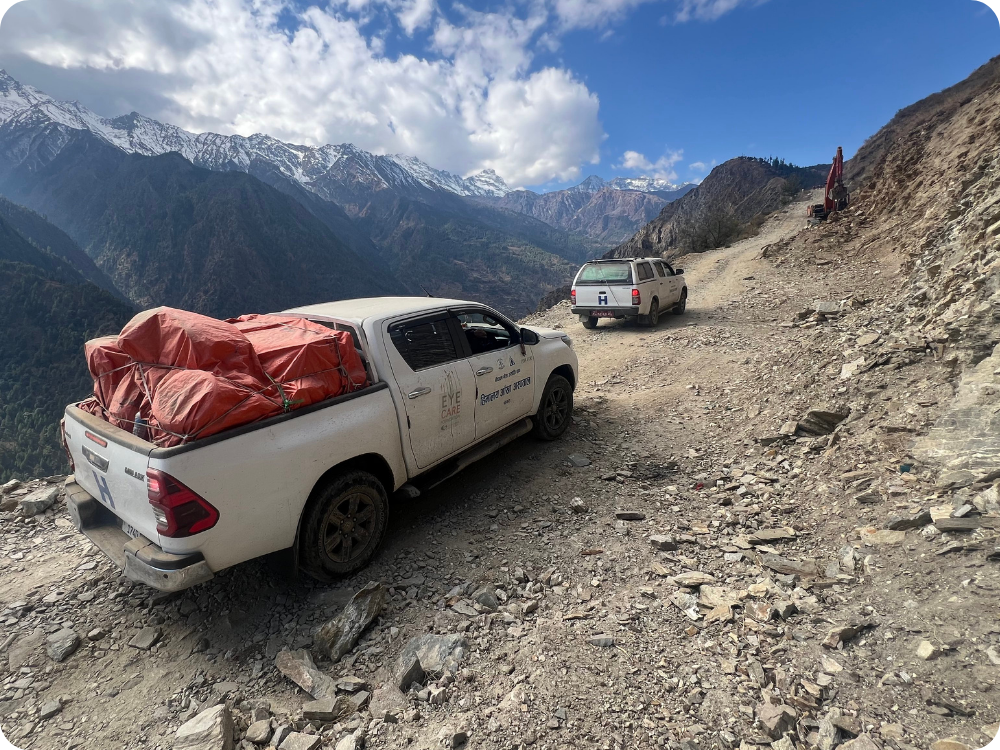
In Nepal, the focus is on continuing and scaling up activities, with many successful eye screenings, cataract surgeries, and other eye operations. At the same time, the organization is preparing for a new project phase and remains dependent on government approvals and evaluations. Fuel prices in Nepal have reached record highs due to rising global energy costs.
The situation in Vietnam
In Vietnam, strong progress is being made through new projects, training programs, and collaborations with hospitals and universities. At the same time, rising costs, shortages of modern ophthalmic equipment, and import restrictions are causing delays in implementation. This requires flexibility and close coordination with partners.
The situation in Tanzania
In Tanzania, extreme weather conditions are having a major impact. Flooding has made areas difficult to reach and put pressure on health facilities. Despite these challenges, local teams continue to carry out eye screenings and train healthcare workers. Fuel prices in Tanzania have also reached record highs. The sharp increase, partly driven by conflicts in the Middle East, is significantly affecting transport costs and inflation.
What does this mean for our work?
Our projects continue, but the context is changing. Geopolitical tensions, economic uncertainty, climate change, and administrative processes are increasingly influencing how and when we can carry out our activities.
That is why strong collaboration with local partners, flexibility in our approach, and long-term commitment remain essential. Together, we continue to build accessible eye care, even in an increasingly complex world.


